How Rand-Whitney Uses Technology to Improve Quality & Efficiency
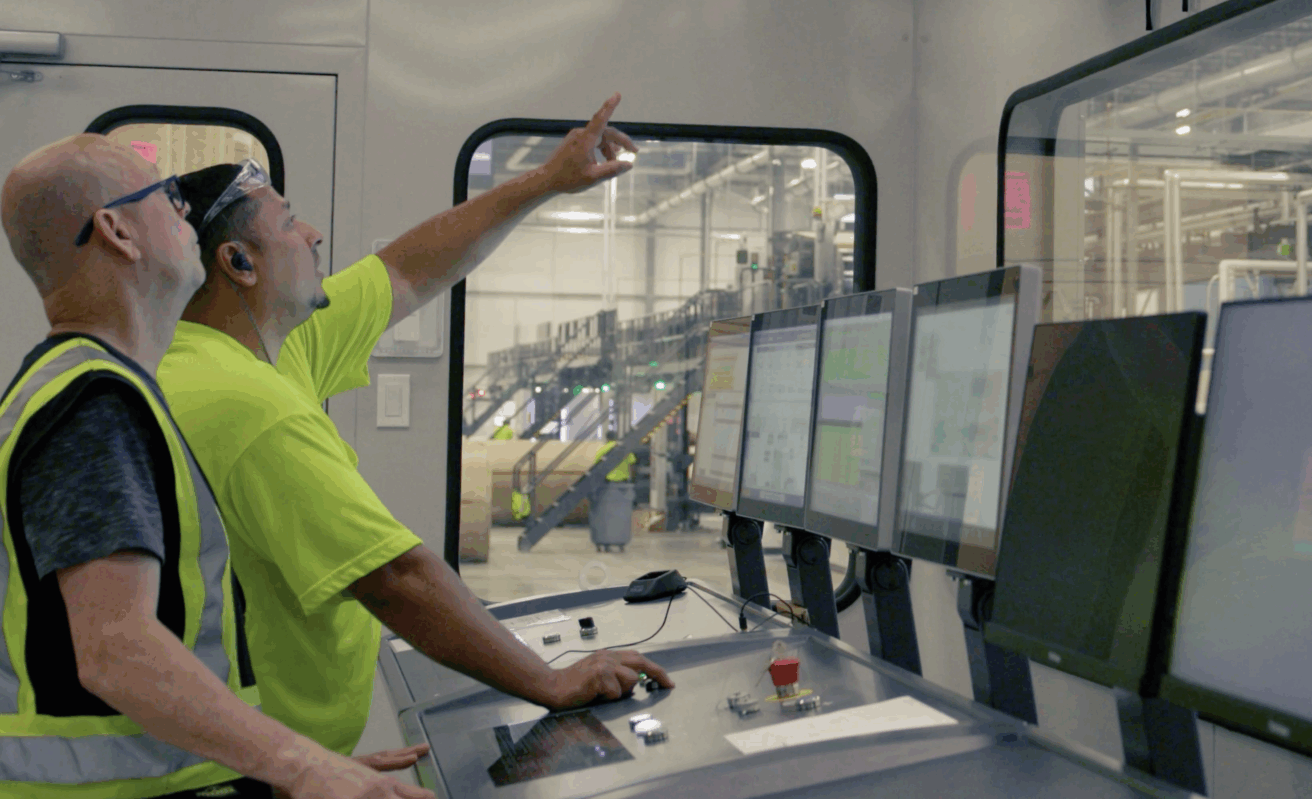
The world has come a long way since we first started making packaging and technology continues to advance at an incredible speed. During the life of Rand-Whitney, people first landed on the moon, the internet was created, and now artificial intelligence is on every one’s mind. We pride ourselves in staying ahead of the curve, utilizing the latest advancements to improve efficiency, quality and safety within our manufacturing facilities.
We view developing our technology suite as a must have in order to continually improve our product offerings and our workplace. We are constantly exploring new products and solutions to integrate into our processes.
Glue Detection
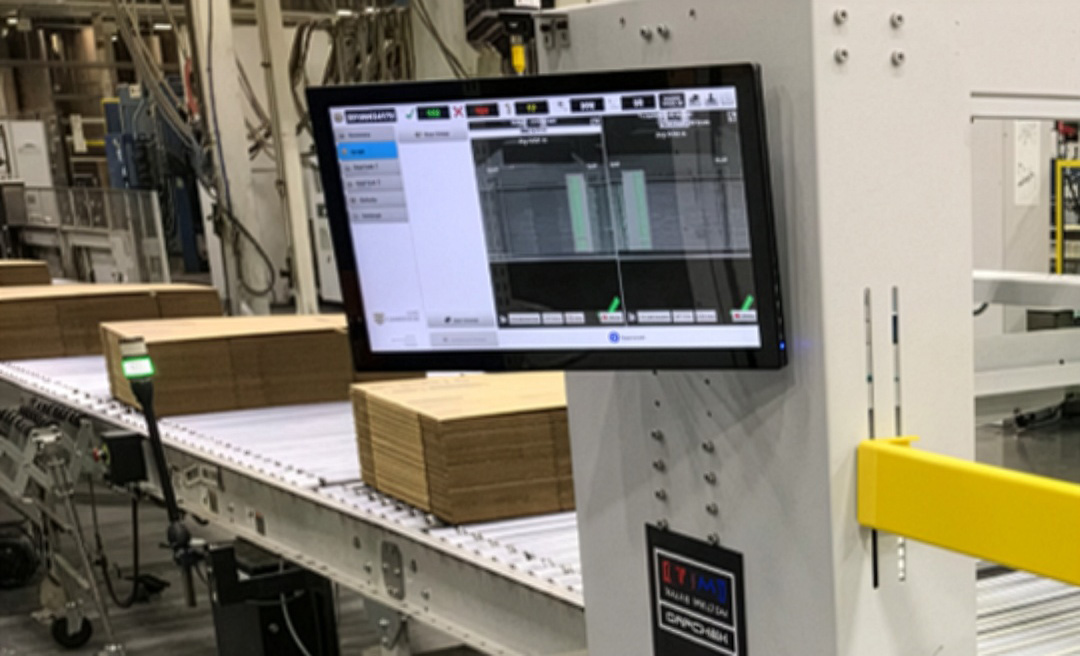
Glue detection software is small but important piece of our quality teams overall efforts. Our flexo folder gluers utilize this software to automatically detect when the necessary amount of glue has been applied to each box. Using a camera, the system has been trained to look for a minimum amount of glue. When there isn’t a sufficient amount, it flags the box for the operators to investigate. This doesn’t replace manual quality checks but adds a second layer of defense.
Corrugator Auto Defect Ejection
We utilize a Zero-Defect System within our corrugators. The system utilizes several sensors to check board for the smallest bonding defects, folds or splices. Any defective portions are ejected at the cutoff at speeds of up to 1300 ft/min. Eliminating quality issues early in the process is crucial to preventing them from compounding downstream. Ensuring our converting crews receive good board is important to maintain high quality standards.
AutoPilot for BHS Corrugator
The AutoPilot is the conductor that makes our corrugators work cohesively. It monitors and adjusts the machine, the boiler, and the conveyor to enable the corrugator to accelerate to maximum speed. This ability ensures a level of consistency in our board production that manual adjustments cannot achieve. It also allows us to maximize efficiency in production speed to increase manufacturing output.
Paper Quality
At our paper mill, Rand-Whitney Containerboard, we use a system to monitor paper quality. It analyzes camera images of the sheet and counts pixels that fall outside the expected “standard” for kraft fiber outlined in Tappi standard 563. It converts that data into a parts-per-million (ppm) value to quantify sheet cleanliness. Sheets exceeding our threshold are rejected per standard procedures.
OCC Contamination Detection
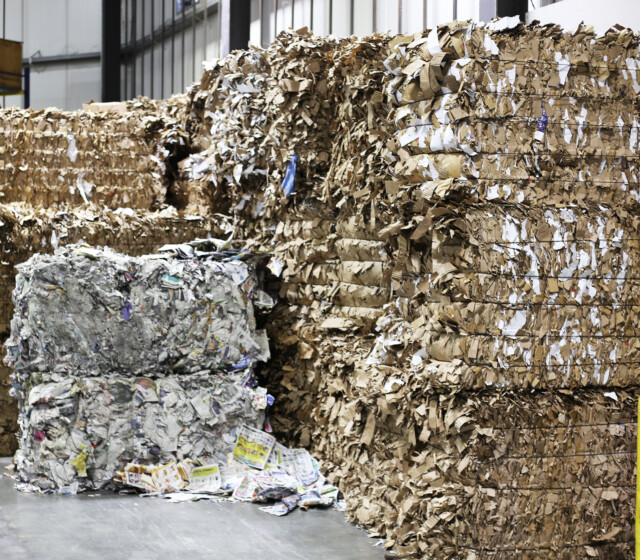
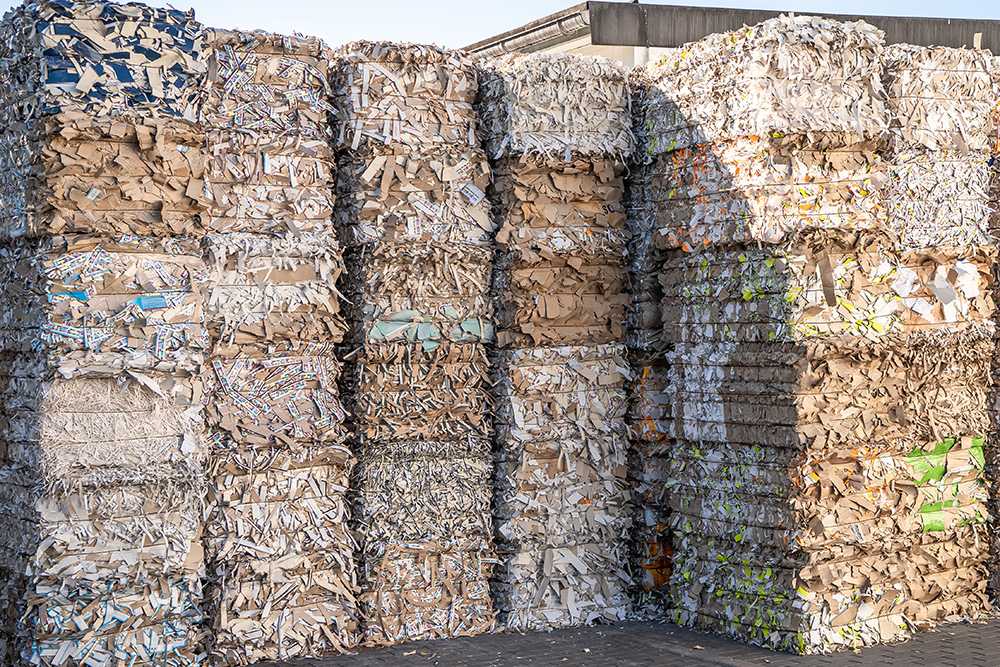
The longest running and perhaps most important solution at our paper mill is the OCC Contamination Detection. The paper production process at Rand-Whitney Containerboard relies on clean, quality OCC (Old Corrugated Containers), to make 100% recycled liner. One of the biggest bale contaminates is excessive plastic that accidentally gets mixed in. Our team shows the system examples of bad bales to train it what to look for. Any time we come across a new contaminate, images can be added to the training catalog to increase accuracy. This leads to a more efficient process stemming from cleaner, easier to work with material.
Roll Damage Detection
We use another camera detection system in the finished goods warehouse at our paper mill to detect damaged rolls. The application has been trained to look for rolls that have been harmed during movement or processing. It then alerts operators to remove those rolls, so they do not get shipped to converting facilities.
Converting Conveyor Efficiency
Our production team has set up cameras overseeing our converting conveyor lines. The cameras feed to a program that has been trained to know what the optimal lines look like. It sends alerts to operators when issues arise including log jams of too many bales in a set space, no bales passing through, or bales that are skewed. Operators then address these concerns to restore optimal workflow.
Safety Alert System
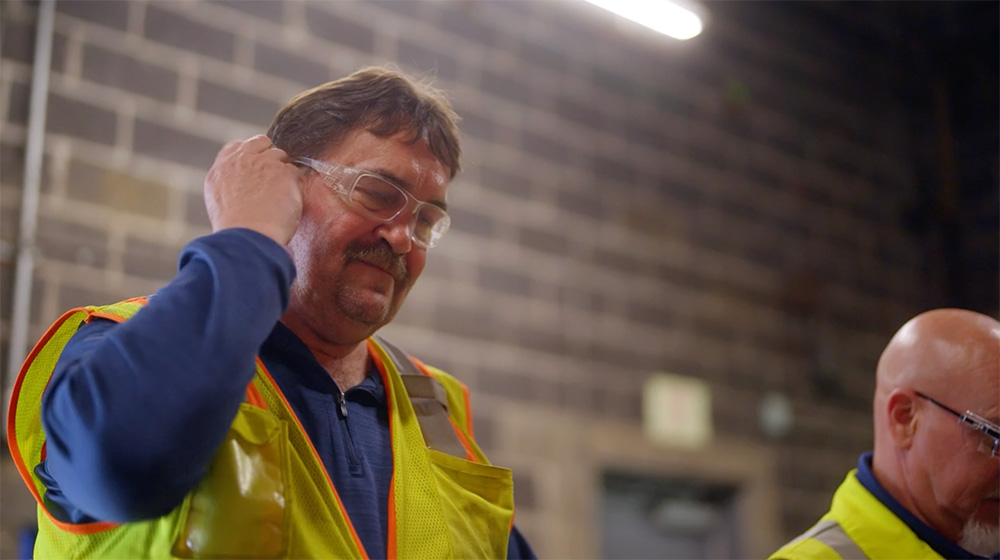
As part of our ongoing efforts to maintain employee safety, we are committed to ensuring everyone uses proper PPE in manufacturing environments. We have set up a system that sends alerts to a member of our safety team if anyone enters the manufacturing floor without wearing proper protective equipment. This maintains high visibility in all parts of our facilities.